
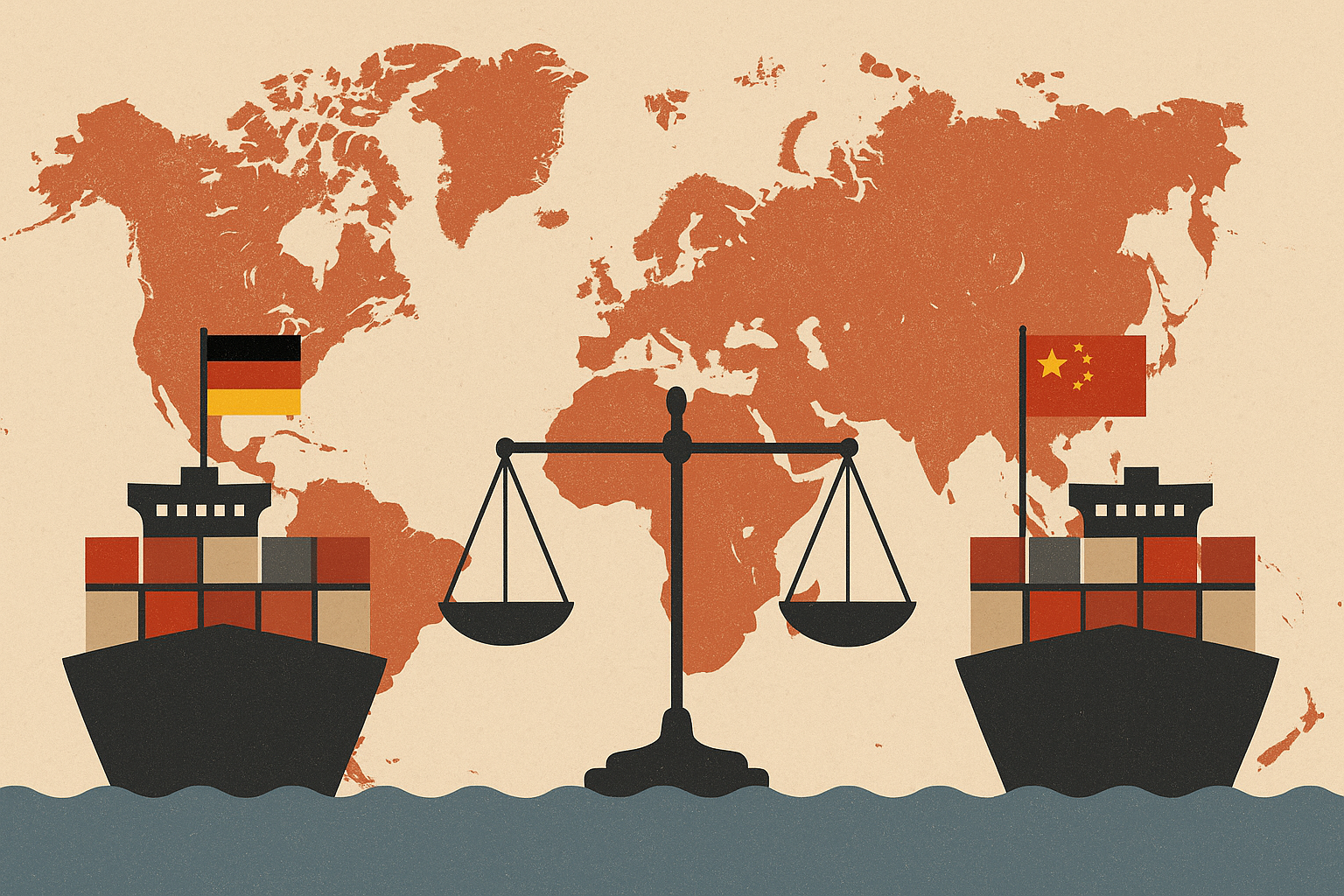
Germany’s trade data for October offered a brief moment of stability for an economy that has struggled to regain consistent strength, but the figures also highlighted how rising competition from China is reshaping the country’s global position.
The latest update from Destatis showed only a slight improvement in exports, yet even this small change has taken on new importance as German manufacturers adjust to pressure from faster-growing rivals and weaker demand from major partners.
The challenge now is whether this stabilisation can support an industrial base facing deeper structural issues and a shifting international landscape.
Exports in October increased 0.1% from the previous month, falling short of the 0.2% median estimate by experts. The rise followed a revised 1.5% increase in September.
Imports declined more sharply than expected, widening the trade surplus to €16.9 billion, equal to about $19.7 billion.
Destatis data also showed a significant pullback in trade activity with the US.
Exports to the country fell 7.8% from a month earlier, while imports dropped 16.6%.
Shifting demand
At the start of the year, Germany recorded stronger trade activity as firms accelerated shipments to avoid potential higher US tariffs.
That momentum has faded, leaving weaker exports to weigh on the economy during the second and third quarters.
The cooling demand underscores how exposed Germany remains to shifts in global policy and how external pressures feed directly into manufacturing performance.
October readings for factory orders and industrial production showed signs of stabilisation, suggesting Germany may have secured modest growth in the final three months of the year.
This stabilisation is becoming increasingly important as competition from China expands across key sectors that once anchored German export strength.
Economic support
The Bundesbank and other forecasters expect output to have expanded again between October and December.
Their assessment reflects the impact of higher government spending and recent interest rate cuts from the European Central Bank.
These measures have helped offset some of the pressure caused by weaker export demand and broader global uncertainty.
Germany now faces a more complex competitive landscape where China’s rapid industrial growth intensifies pressure on traditional export markets.
Domestic challenges add to the strain, including regulatory hurdles and shortages of skilled labour.
Chancellor Friedrich Merz’s economic advisors have reduced next year’s growth forecast to below 1%, illustrating the scale of constraints facing the economy.
The persistence of these challenges raises concerns among policymakers who note that any recovery in trade may remain vulnerable if demand continues to shift and global competitors widen their reach across advanced manufacturing supply chains.
Economists and industry groups have urged the government to accelerate reforms designed to improve competitiveness and rebuild confidence among manufacturers operating in an increasingly contested global market.
The post German trade surplus increases in October as China rivalry intensifies appeared first on Invezz